Wholesale Promotional Products: A Distributor's Guide to Factory-Direct Sourcing
Learn how distributors can source wholesale promotional products directly from factories. Covers supplier evaluation, MOQ negotiation, quality control, blind shipping, and how to maximize margins with factory-direct sourcing.
The promotional products industry is built on layers of middlemen. A custom tote bag might pass through three or four hands — manufacturer, trading company, importer, distributor — before reaching the end buyer. Each layer adds markup, and every markup eats into your margin.
Factory-direct sourcing eliminates those intermediaries. For promotional product distributors, SAGE-listed resellers, and ASI members, buying wholesale promotional products directly from factories is not just a cost-saving strategy — it is a competitive advantage that can transform your business.
This guide covers everything you need to know about sourcing custom promotional products wholesale directly from overseas factories: how to find reliable suppliers, negotiate MOQs, manage quality control, arrange blind shipping, and protect your client relationships throughout the process.
Why Factory-Direct Sourcing Matters for Distributors
The wholesale promotional products market in the United States alone exceeds $24 billion annually. With margins under constant pressure from price comparison tools and client procurement departments, distributors need every edge they can get. Part of that edge is pitching clients on measurable value: promotional products consistently deliver a far lower cost-per-impression than digital ads, and the full cost-per-impression comparison data makes that case for you.
The margin equation
Consider a typical mark-up chain for a custom canvas tote bag:
| Stage | Unit Cost | Cumulative Markup |
|---|---|---|
| Factory (China) | $1.20 | Baseline |
| Trading Company | $1.80 | +50% |
| Domestic Importer | $2.70 | +50% |
| Distributor (wholesale) | $4.50 | +67% |
| End Buyer Price | $7.50–$10.00 | +67–122% |
By sourcing directly from the factory at $1.20, a distributor's wholesale price drops from $4.50 to roughly $1.80–$2.20 (including shipping and logistics). That is a 51–60% reduction in cost of goods sold, which translates to either higher margins, more competitive pricing, or both.
Beyond price: the strategic advantages
Lower unit cost is the most obvious benefit, but factory-direct sourcing delivers additional advantages:
- Product differentiation — Direct access to factory capabilities means you can request custom materials, unique sizes, and proprietary designs that competitors cannot easily replicate.
- Faster sample turnaround — Working directly with production eliminates relay delays. Design iterations that take weeks through intermediaries can happen in days.
- Consistent quality control — When you establish a direct relationship with a factory, you set the quality standards — not a middleman interpreting your requirements.
- Supply chain transparency — You know exactly where your products are made, what materials are used, and what labor standards are in place. This matters increasingly for corporate clients with compliance requirements.
Finding and Evaluating Overseas Promotional Product Suppliers
The first challenge is identifying factories that are actually manufacturers — not trading companies presenting themselves as factories. The distinction matters because trading companies add cost without adding production capability.
Where to find legitimate factory suppliers
| Channel | Best For | Vetting Required |
|---|---|---|
| Alibaba / Global Sources | Initial discovery, broad product range | High — verify factory status |
| Canton Fair (China) | Direct factory meetings, sample evaluation | Medium — in-person verification |
| SAGE / ASI supplier networks | Pre-vetted overseas factories | Low — network screening helps |
| Trade associations (PPAI) | Verified supplier directories | Low |
| Industry referrals | Proven relationships | Low — based on peer experience |
| Factory-direct platforms (like The Promo Vault) | Pre-qualified factories with US-based support | Minimal |
Supplier evaluation checklist
Before placing your first order with a new overseas supplier, work through this checklist:
- Business verification — Confirm the company's legal registration, years in operation, and factory ownership. Request a copy of their business license.
- Production capability — Ask about monthly capacity, production lines, and equipment. A legitimate factory can tell you exactly how many units they produce per month.
- Quality certifications — Look for ISO 9001, BSCI, Sedex, or equivalent quality management certifications. These indicate systematic quality processes, not ad-hoc inspection.
- Client references — Request contact information for 2-3 existing clients in your market. A reputable factory will provide these without hesitation.
- Sample process — Evaluate their sample turnaround time, sample pricing, and willingness to iterate on your design. A factory that pushes back on samples is a red flag.
- Communication quality — Response time, English proficiency, and willingness to address detailed technical questions all signal how smooth production will be.
- Compliance documentation — If you supply healthcare, financial services, or government clients, verify that the factory can provide material safety testing, CPSIA compliance, and restricted substance testing (REACH, Prop 65).
Requesting and evaluating samples
Never skip the sample stage — no matter how good the factory looks on paper. Order samples of at least three different factories for any new product category. Evaluate each sample against these criteria:
- Material quality — Does the fabric feel substantial? Is the weight consistent with what was quoted?
- Construction — Are seams evenly stitched? Are there loose threads or frayed edges?
- Print quality — Is the imprint sharp, properly aligned, and color-accurate?
- Hardware — Do zippers operate smoothly? Are buckles and clasps secure?
- Packaging — Is individual packaging clean and professional?
- Size accuracy — Do dimensions match the specifications?
Understanding and Negotiating MOQs
Minimum Order Quantity (MOQ) is one of the biggest barriers for distributors exploring factory-direct sourcing. Understanding how MOQs work — and how to negotiate them — can open up sourcing options you thought were out of reach.
How MOQs are structured
MOQs exist because factories need to offset the fixed costs of production setup:
- Printing setup — Creating screens, mixing colors, calibrating machines
- Material cutting — Setting cutting patterns, adjusting dies
- Production line allocation — Scheduling machine time, assigning workers
- Quality inspection — Training inspectors on your specific product specs
Typical MOQ ranges for common promotional products:
| Product Category | Typical MOQ Range | Notes |
|---|---|---|
| Tote bags (canvas/cotton) | 500–2,000 units | Lower MOQs available for standard styles |
| Drawstring backpacks | 1,000–3,000 units | Often lower per-unit cost at volume |
| Duffel bags | 500–1,500 units | Higher complexity means fewer factories offer low MOQs |
| Messenger bags | 300–1,000 units | Smaller market, more negotiable MOQs |
| Clear stadium bags | 1,000–5,000 units | PVC material orders drive higher minimums |
Strategies to lower MOQs
If a factory's stated MOQ is beyond your current needs, try these approaches:
Negotiate with production timing. Factories often have production gaps between large orders. If you can be flexible on delivery timing, the factory may accept a smaller order to fill capacity.
Start with stock blank items. Many factories carry inventory of unprinted products. Ordering blanks at lower MOQs and having them printed domestically or at the factory in smaller batches can be a viable compromise.
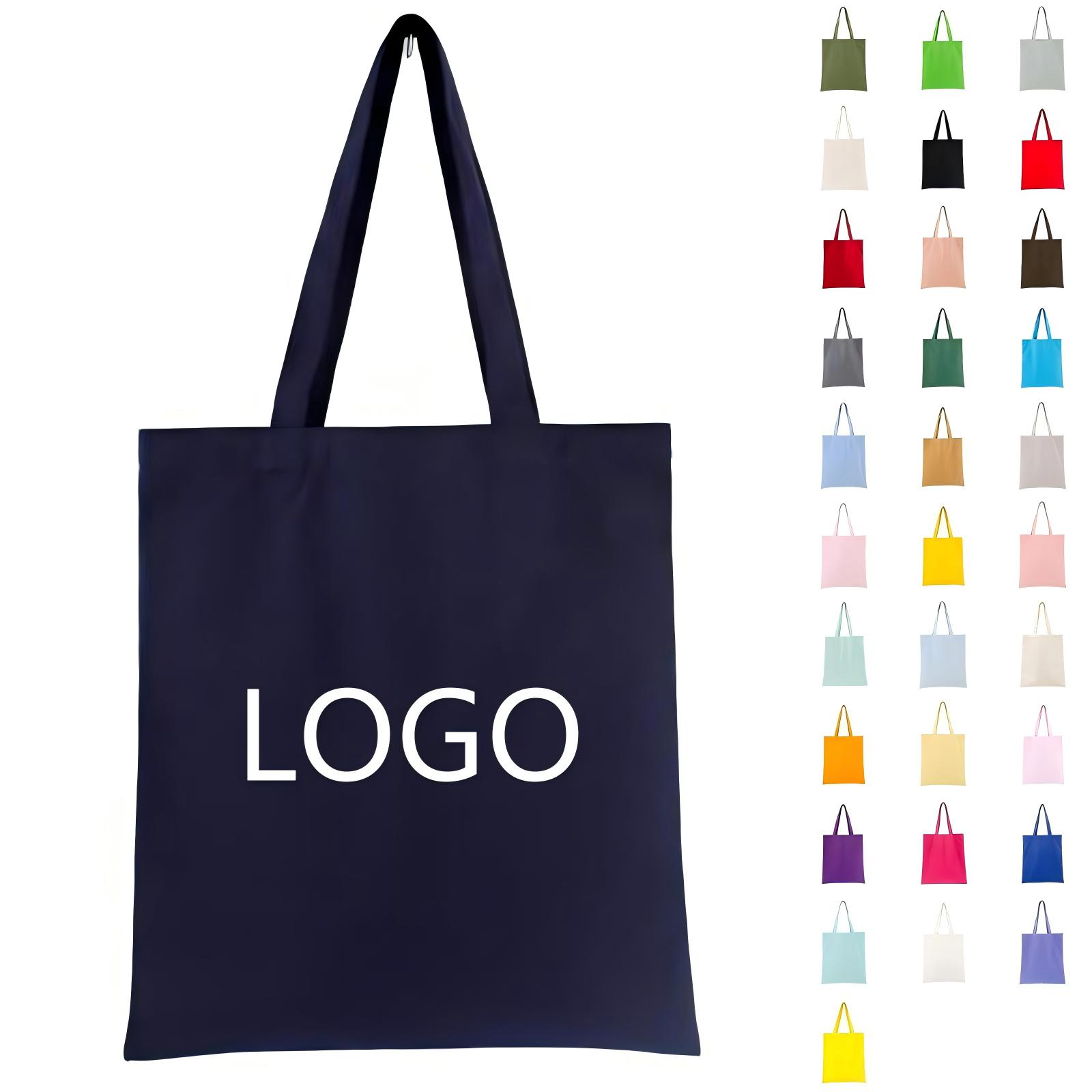
Combine orders across clients. If you have multiple clients ordering similar items, consolidate them into a single factory order to meet the MOQ. This works especially well with Standard Vertical Style 12oz Cotton Canvas Totes, where the base product is the same but each client gets a different imprint.
Ask about "trial order" programs. Some factories will accept a smaller first order at a slightly higher unit price, with the understanding that larger orders will follow. Make this explicit in your communication.
Quality Control for Custom Promotional Products
Quality control is where factory-direct sourcing either succeeds or fails. When you buy through a domestic importer, they handle QC. When you go direct, QC is your responsibility.
The three-stage inspection model
Professional sourcing teams use a three-stage inspection process:
1. Pre-production inspection (PPI)
Before mass production begins, verify that raw materials meet your specifications. This is especially critical for promotional products where material quality directly impacts end-buyer perception. For canvas tote bags, check fabric weight (measured in ounces per square yard), color consistency across dye lots, and any coatings or treatments specified in your order.
2. During-production inspection (DPI)
At 20-30% production completion, inspect a random sample from the production line. Check for consistent stitching, print alignment, color accuracy, and overall construction. Catching issues at this stage allows corrections before the majority of units are produced.
3. Final random inspection (FRI)
Before shipment, inspect a statistically significant random sample using the AQL (Acceptable Quality Level) standard. AQL Level II is the industry standard for promotional products.
| AQL Level | Defect Type | Acceptable Rate |
|---|---|---|
| Critical | Safety hazards, non-functional items | 0% |
| Major | Visible defects affecting use or appearance | 2.5% |
| Minor | Cosmetic imperfections not affecting function | 4.0% |
When to use third-party inspection
For orders over $5,000 or for products going to compliance-sensitive clients (healthcare, finance, government), invest in a third-party inspection service. Companies like SGS, Bureau Veritas, and Intertek offer inspection services in most manufacturing regions for $200–$500 per inspection.
For smaller orders, request that the factory send detailed photos and video of the finished products before shipment. A reputable factory will comply without objection.
Common quality pitfalls in promotional products
- Color mismatch — Monitor carefully, especially with Pantone color matching on different materials. Canvas absorbs ink differently than polyester.
- Sizing inconsistency — Promotional bags should be within ±0.5 inches of specified dimensions.
- Print cracking — Indicates incorrect curing temperature or inferior ink. Most common on heat-transferred designs.
- Zipper failures — Test every zipper on sample units. A 5% zipper failure rate in a 1,000-unit order means 50 useless bags.
- Odor issues — New products, especially those with PVC components, may have chemical odors that dissipate with airing. Request that factories air products before packaging if shipping to clients with strict standards.
Blind Shipping: Protecting Your Client Relationships
One of the most important — and frequently overlooked — aspects of factory-direct sourcing is blind shipping. This means the factory ships finished products directly to your end client without any factory branding, packing slips, or other information that would reveal your source.
Why blind shipping matters
Your client relationships are built on the value you provide: product expertise, creative solutions, reliability, and trust. If your client discovers they could go directly to your factory source and cut you out, that relationship is at risk.
Proper blind shipping ensures:
- Packing slips show your company name and contact information, not the factory's
- Outer cartons display your branding or are neutral
- No factory logos, return addresses, or identifying marks appear on any packaging
- Shipping documents reference your company as the shipper
- All communication about the shipment flows through you, not the factory
Blind shipping logistics options
| Method | How It Works | Best For |
|---|---|---|
| Factory ships direct (blind) | Factory follows your packing/labeling specs | Large orders, established factory relationships |
| Factory to domestic warehouse (blind) | Factory ships to your 3PL, who re-labels and forwards | Added security, smaller orders |
| Factory to you, you forward | Products arrive at your location, you repack and ship | First orders, new suppliers, highest control |
For distributors working with The Promo Vault, blind shipping is standard on every order. Products arrive at your client's location with your branding only — no factory markings, no supplier information, no pricing details.
Pricing Structure: Understanding Factory-Direct Costs
To make smart sourcing decisions, you need to understand how factory-direct pricing works. Unlike domestic wholesalers who quote a single delivered price, factory pricing has multiple components.
The cost breakdown
A typical factory-direct price quote includes:
| Component | Typical Range | Notes |
|---|---|---|
| Base product cost | 60-70% of total | Raw materials + manufacturing labor |
| Imprint/branding | 5-15% of total | Setup fee (one-time) + per-unit print cost |
| Quality inspection | 2-5% of total | Third-party or factory QC |
| Inland freight (factory to port) | 3-5% of total | Trucking within manufacturing country |
| Ocean freight | 8-15% of total | Container shipping to US port |
| Customs and duties | 3-8% of total | Varies by product HTS code and origin |
| Inland freight (port to destination) | 5-10% of total | Domestic trucking or rail |
| Insurance | 1-2% of total | Cargo insurance for transit |
Shipping methods compared
| Method | Transit Time | Cost (per kg) | Best For |
|---|---|---|---|
| Ocean freight (FCL) | 25–35 days | $2–$4 | Large orders filling a container |
| Ocean freight (LCL) | 30–40 days | $5–$8 | Medium orders not filling a container |
| Air freight | 3–5 days | $8–$15 | Rush orders, high-value-per-unit items |
| Express courier | 2–4 days | $15–$30 | Samples, very small urgent orders |
For most promotional product orders, ocean freight LCL (Less than Container Load) is the most practical option. A typical order of 1,000–5,000 tote bags weighs 150–600 kg and fits comfortably in an LCL shipment.
Building Long-Term Factory Relationships
The most successful promotional product distributors do not just find factories — they build partnerships. A strong factory relationship delivers compounding benefits over time: better pricing, priority production slots, access to new products, and faster problem resolution.
Start with a small, manageable order
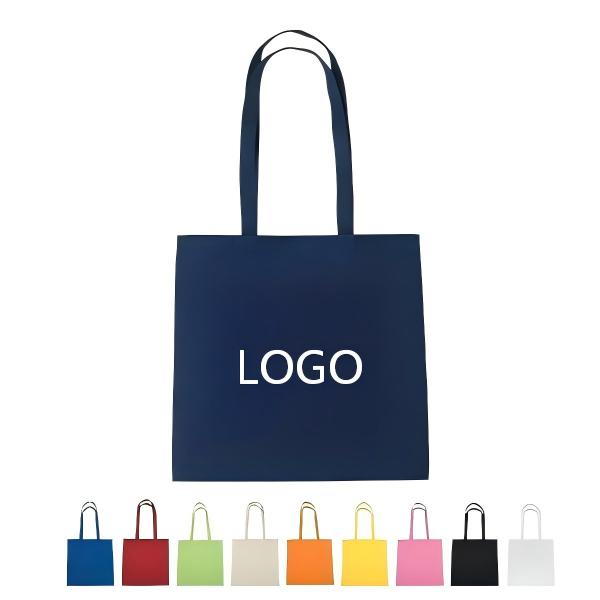
Your first order with a new factory should be a test order: small enough to limit risk, but large enough to evaluate their full production process. An order of 300–500 units of a standard product like the Premium 100% Cotton Canvas Totes is an ideal starting point.
Use this first order to evaluate:
- How well they follow your specifications
- Their communication throughout production
- How they handle any issues that arise
- Whether the final product matches the approved sample
- How smoothly blind shipping is executed
Communicate proactively and specifically
Factory relationships improve dramatically when you provide clear, detailed specifications. Include in every purchase order:
- Exact product dimensions with tolerances
- Material specifications (fabric weight, composition, color references)
- Imprint design files in vector format with Pantone colors
- Imprint placement coordinates
- Packaging requirements (individual poly bag, hang tag, etc.)
- Blind shipping instructions
- Quality inspection requirements
- Delivery timeline with milestones
Scale gradually and diversify
Once a factory proves reliable on small orders, gradually increase order volume. But never put all your volume with a single factory. A diversified supplier base protects you from:
- Production delays (factory capacity issues, holidays like Chinese New Year)
- Quality problems (one bad batch does not wipe out your supply)
- Geopolitical risks (tariffs, trade restrictions)
- Natural disasters or pandemic disruptions
Aim for 2-3 primary factories and 1-2 backup suppliers for each product category.
Product Categories Best Suited for Factory-Direct Sourcing
Not all promotional products benefit equally from factory-direct sourcing. The best candidates have these characteristics:
- High volume potential — The unit cost savings compound at scale
- Manufacturing-intensive — Products with significant labor content (bags, apparel) have the largest margin between factory cost and domestic wholesale price
- Standardizable — Products that can be produced to consistent specifications across large runs
- Shipping-efficient — Products that pack flat or nest, minimizing freight costs per unit
Top product categories for factory-direct sourcing
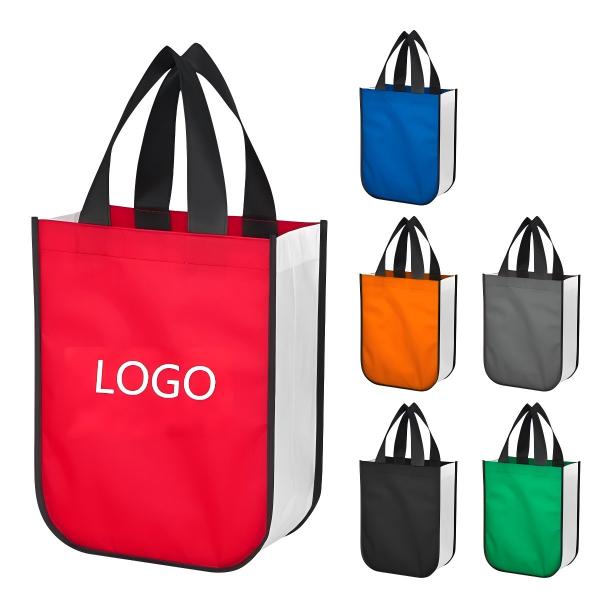
Tote bags and carryalls — The largest and most factory-direct-friendly category. The Standard Vertical Style 12oz Cotton Canvas Totes and 100% Recycled RPET Shopper Totes represent two of the most cost-effective factory-direct products available.
Backpacks and daypacks — Higher unit value means larger absolute margin improvements. Drawstring backpacks and standard daypacks are straightforward to manufacture and ship efficiently.
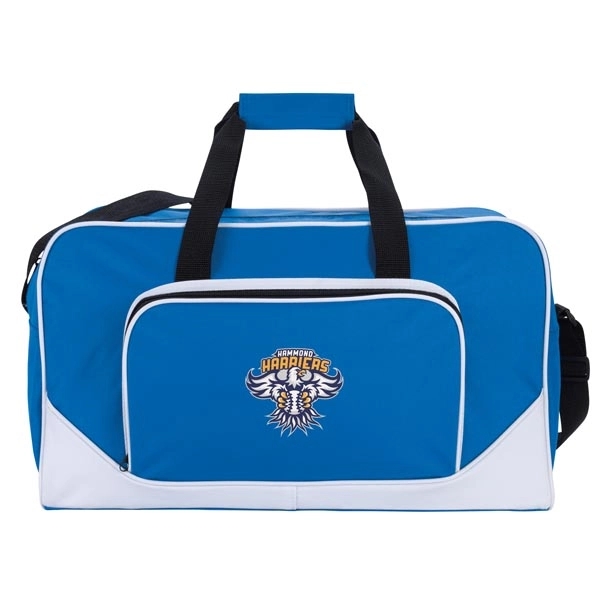
Duffel bags and sports bags — The Team Spirit 600D Polyester Duffel is an excellent factory-direct candidate for team orders, corporate wellness programs, and event giveaways.
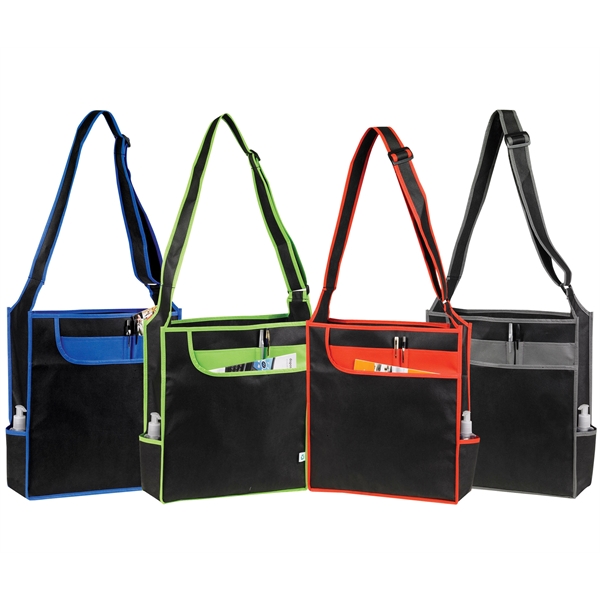
Messenger bags and organizers — The Professional Organizer Messenger Tote appeals to corporate clients and executive gifting programs where margin is premium and volume is moderate.
Eco-friendly and sustainable products — Recycled materials and organic cotton products command higher retail prices, making factory-direct sourcing especially valuable. The sustainability message combined with better margins creates a compelling value proposition for end buyers.
Navigating Compliance and Regulatory Requirements
Promotional products distributed in certain industries carry compliance requirements that affect your sourcing decisions. Understanding these requirements before you place an order prevents costly mistakes.
Industry-specific compliance
| Industry | Key Requirements | Sourcing Implications |
|---|---|---|
| Healthcare / Pharma | FDA compliance for food-contact items, biocompatibility testing | Choose factories with FDA-registered facilities |
| Financial services | Brand consistency requirements, anti-money laundering branding rules | Prioritize factories with precise print capabilities |
| Government / Military | Made-in-USA requirements (Berry Amendment), ITAR compliance | May require domestic sourcing for some items |
| Children's products | CPSIA testing, lead and phthalate limits | Request third-party testing certificates from factory |
| Food service | FDA food-contact approval for containers and bags | Verify material safety data from manufacturer |
Documentation to request from factories
For compliance-sensitive orders, request the following documentation upfront:
- Material safety data sheets (MSDS) for all components
- Third-party test reports for restricted substances (lead, cadmium, phthalates)
- Certificate of origin for customs documentation
- BSCI or Sedex audit reports for ethical sourcing verification
- ISO 9001 certification for quality management systems
Common Mistakes Distributors Make with Factory-Direct Sourcing
Mistake 1: Choosing factories based on price alone
The cheapest quote often means corners cut on materials, quality control, or labor standards. A factory quoting 30% below the next lowest should prompt questions, not celebration.
Mistake 2: Skipping the sample stage
Every factory produces good samples. The question is whether they can reproduce that quality at volume. Order production samples (not just showroom samples) and compare them against your approved prototype.
Mistake 3: Vague specifications
Ambiguous purchase orders lead to disputes. If you want 12oz cotton canvas, specify "12oz (±0.5oz) 100% cotton canvas, natural color, pre-washed." Leave nothing to interpretation.
Mistake 4: Ignoring Chinese New Year and factory holidays
Chinese New Year shuts down most factories for 2-4 weeks, typically in January or February. Plan around this — orders placed in December may not ship until March. Build production timelines that account for factory holidays.
Mistake 5: Not having a backup supplier
Relying on a single factory creates critical supply chain risk. If your primary factory has production problems, quality issues, or capacity constraints, you need an alternative ready to step in.
Mistake 6: Forgetting about customs and duties
Factory pricing is often quoted FOB (Free on Board), meaning it does not include shipping, customs, or duties. Calculate the full landed cost — including all freight, customs classification (HTS code), duty rates, and inland transportation — before comparing factory-direct pricing to domestic alternatives.
Getting Started: Your Factory-Direct Sourcing Action Plan
If you are ready to start sourcing wholesale promotional products directly from factories, follow this action plan:
Week 1-2: Research and initial contact
- Identify 3-5 potential factories for your target product category
- Request factory profiles, certifications, and client references
- Verify business registration and factory status
Week 3-4: Sample evaluation
- Order samples from your top 3 factory candidates
- Evaluate samples using the criteria outlined in this guide
- Select your primary factory and a backup
Week 5-6: First order placement
- Place a test order of 300-500 units
- Include detailed specifications and blind shipping instructions
- Schedule a during-production inspection at 30% completion
Week 7-10: Production and delivery
- Monitor production progress with regular updates from the factory
- Conduct final inspection before shipment approval
- Coordinate delivery to your client (blind) or your warehouse
Week 11-12: Post-order evaluation
- Review product quality against specifications
- Assess client satisfaction with the finished product
- Document lessons learned and update your supplier evaluation notes