How to Choose Promotional Products for Your Brand
A step-by-step guide to selecting promotional products that align with your brand, audience, and budget. Learn how to evaluate quality, choose the right imprint method, and maximize your marketing ROI.
Most companies approach promotional products the wrong way. They pick the cheapest item with the largest imprint area, slap their logo on it, and hope for the best. Then they wonder why a warehouse full of branded keychains and cheap pens did nothing for their brand awareness.
The reality is that choosing the right promotional product is a strategic decision — one that can generate measurable returns when done correctly, or waste your budget when done carelessly.
This guide walks you through a systematic framework for selecting promotional products that your audience will actually use, that align with your brand values, and that deliver a positive return on your investment.
Define Your Objective First
Before you browse a single product catalog, answer one question: What specific outcome do you want from this promotional investment?
Different goals call for different products. Here is how your objective shapes your selection:
| Objective | Best Product Type | Why It Works |
|---|---|---|
| Brand awareness at events | High-visibility bags, apparel | Logo gets seen by hundreds of people per use |
| Customer appreciation | Premium gifts, lifestyle items | Recipients feel valued, strengthening loyalty |
| Lead generation at trade shows | Practical, portable items | Drives booth traffic and creates follow-up opportunity |
| Employee onboarding | Daily-use office items | Reinforces company culture every working day |
| Retail merchandise | Trendy, quality goods | Customers pay to promote your brand |
Trying to serve multiple objectives with one product usually means serving none of them well. Pick a primary goal and let it guide every decision that follows.
Know Your Audience
The single biggest predictor of whether a promotional product succeeds is relevance to the recipient. A product that resonates with tech developers will likely fall flat with healthcare professionals, and vice versa.
Start with demographics
Consider the basic profile of your target audience:
- Age group — Younger audiences tend to prefer modern, lifestyle-oriented items like backpacks and tech accessories. Older professionals may appreciate classic items like leather-look messenger bags and high-quality tote bags.
- Industry — A financial services firm has different brand expectations than a construction company. Match the product quality and style to the industry's culture.
- Geographic location — Climate matters. Insulated items perform better in cold regions, while lightweight bags and outdoor gear resonate in warmer climates.
Understand their daily routine
The promotional products with the highest retention rates are the ones that fit naturally into someone's day. Ask yourself:
- What does your audience carry to work every day?
- What do they use during their commute?
- What items do they reach for repeatedly throughout the week?
Consider gift psychology
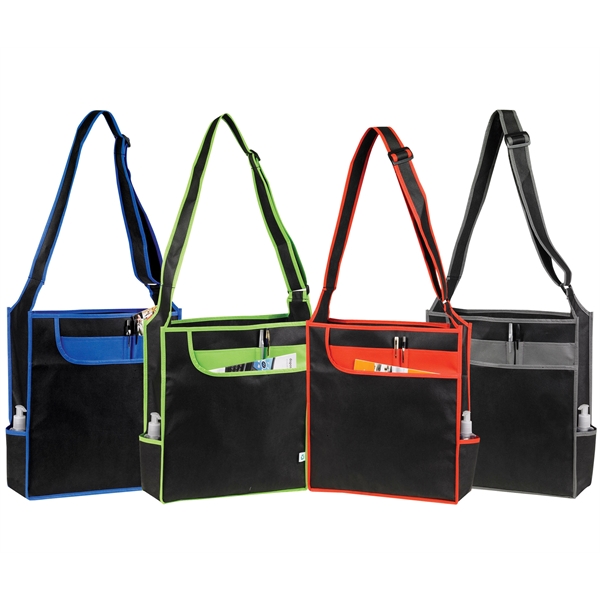
People keep items that serve a genuine purpose or that carry emotional weight. A high-quality Professional Organizer Messenger Tote that helps someone stay organized during meetings will be used for months or years. A flimsy giveaway that feels like an afterthought ends up in a drawer — or the trash.
Match the Product to the Context
Even a great product can fail if it is delivered in the wrong context. Think about when and where your audience will receive the item.
Trade shows and conferences
Trade show attendees are walking all day, collecting materials, and carrying things. Products that solve a practical problem in this environment are the ones that get noticed and appreciated:
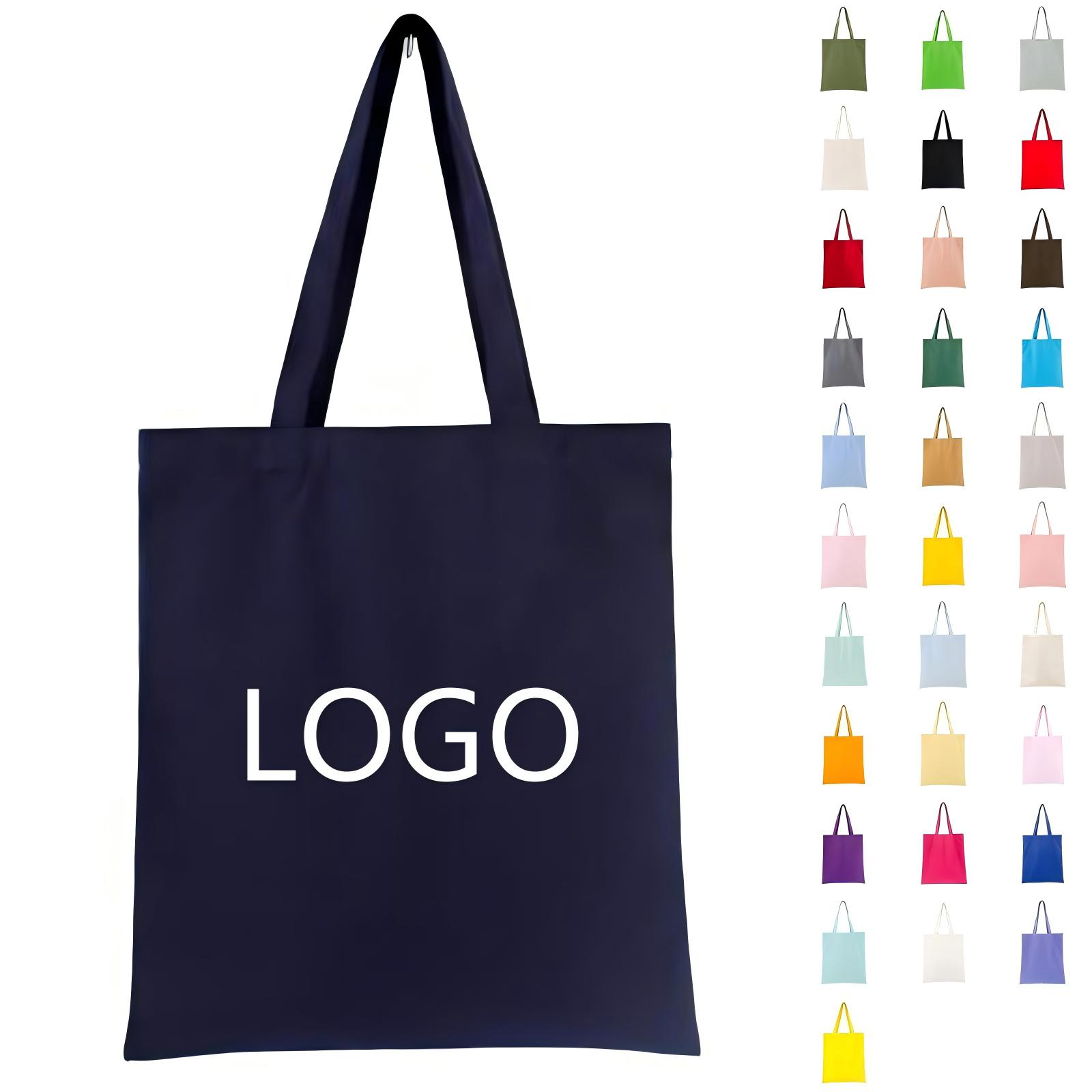
- Tote bags — Attendees need something to carry brochures, samples, and business cards. A Standard Vertical Style 12oz Cotton Canvas Totes doubles as a walking billboard for your brand throughout the venue.
- Drawstring bags — Lightweight and easy to carry, perfect for the exhibit hall floor.
- Lanyards and badge holders — Essential for any conference, keeping your brand at eye level.
Corporate gifts and client appreciation
When the context is relationship-building rather than mass distribution, quality takes priority over quantity. Premium materials, thoughtful design, and useful functionality signal that you value the relationship.
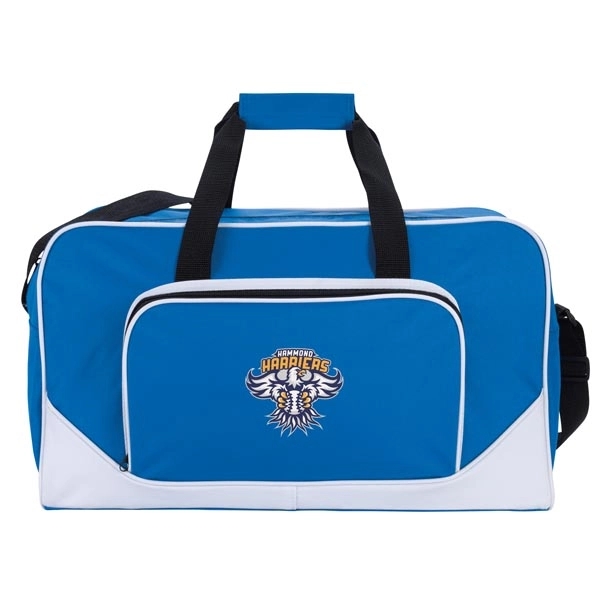
A Team Spirit 600D Polyester Duffel makes a strong impression as a corporate gift — it is the kind of item that gets used for gym trips, weekend getaways, and business travel, putting your brand in front of the recipient for years.
Employee programs
For employee onboarding, anniversaries, or wellness programs, choose items that integrate into the workday:
- Backpacks for commuting
- Tote bags for errands and meetings
- Bags with organizational features for professionals who carry laptops and documents
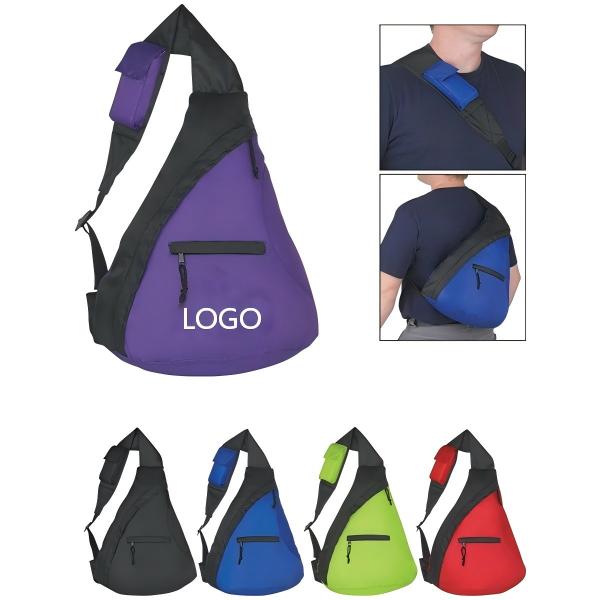
The Affordable Crossbody Backpacks works well for employee programs because it is practical, modern, and suitable for a wide range of personal styles.
Quality Over Quantity — Always
This is where most budgets go wrong. Ordering 5,000 cheap items that end up in the trash costs more in the long run than ordering 1,000 quality items that people actually keep.
The true cost of cheap promotional products
Consider this scenario:
- Option A: 5,000 basic non-woven bags at $0.50 each = $2,500 total
- Option B: 1,000 canvas tote bags at $3.00 each = $3,000 total
Option A seems cheaper. But if only 15% of recipients keep the non-woven bag beyond one week, you paid for 4,250 items that generated zero lasting impressions. With Option B, if 80% of recipients use the canvas bag regularly for a year, each bag generates hundreds of impressions — bringing your effective cost per impression far below Option A. This is cost-per-impression thinking in action; our cost-per-impression comparison of promotional products vs digital ads breaks down the full math by product category and ad platform.
How to evaluate product quality
When reviewing product samples, check these criteria:
- Material weight and feel — Heavier fabrics and solid construction signal quality. Lightweight, thin materials feel cheap.
- Stitching and seams — Look for even stitching with no loose threads. Double-stitched seams last significantly longer.
- Zippers and hardware — Metal zippers outperform plastic. Test them to ensure smooth operation.
- Print quality — Your logo should look sharp and professionally applied. Fuzzy, uneven printing damages brand perception.
- Overall finish — Are there frayed edges, mismatched colors, or visible glue marks?
Choose the Right Imprint Method
The way your logo is applied to a product is just as important as the product itself. The wrong imprint method can make even a quality item look amateurish.
Screen printing
The most common and cost-effective method for large orders. Best for simple designs with 1-4 colors. Works well on tote bags, drawstring bags, and flat fabric surfaces.
- Pros: Low cost per unit at high volumes, durable, vibrant colors
- Cons: Not suitable for complex artwork or photographs, setup cost per color
Heat transfer
Uses heat to press a design onto the product. Ideal for detailed artwork, gradients, and multi-color designs.
- Pros: Can reproduce complex designs and photographs, no color limits
- Cons: May crack or peel over time if low-quality transfers are used
Embroidery
Stitches your design directly into the fabric. Conveys a premium, professional look.
- Pros: High perceived value, extremely durable, textured appearance
- Cons: Higher cost, limited detail for small designs, not suitable for all fabrics
Debossing and embossing
Presses your design into the material (debossing) or raises it (embossing). Often used on leather and leatherette items.
- Pros: Sophisticated, subtle branding, premium feel
- Cons: Limited to simple designs, single color only
For most bag products, screen printing offers the best balance of quality, cost, and durability. The 100% Recycled RPET Shopper Totes pair especially well with screen printing, producing vivid logos on the recycled fabric surface.
Align with Your Brand Values
Your promotional products are an extension of your brand. Every item you distribute sends a message about who you are as a company.
Sustainability matters more than ever
Consumer expectations around sustainability have shifted dramatically. 73% of millennials are willing to pay more for sustainable products, and that preference extends to the promotional items they receive.
Choosing eco-friendly promotional products is no longer a niche positioning — it is becoming a baseline expectation, especially for brands targeting younger demographics or positioning themselves as forward-thinking.
• Organic cotton — Grown without pesticides, biodegradable
• Recycled PET (RPET) — Made from recycled plastic bottles, reduces waste
• Canvas — Natural, durable, and reusable for years
• Jute and burlap — Fully biodegradable, rustic aesthetic
The 100% Recycled RPET Shopper Totes are made entirely from recycled materials, allowing you to promote your brand while demonstrating environmental responsibility. This is particularly effective for companies that have made public sustainability commitments.
Visual consistency
Your promotional products should be immediately recognizable as yours. This means:
- Using your exact brand colors, not approximations
- Maintaining consistent logo placement and sizing
- Choosing product colors that complement or match your brand palette
- Ensuring the product style aligns with your brand personality (e.g., a law firm should not distribute neon-colored items)
Budget Planning and ROI
Smart budgeting for promotional products is not about spending less — it is about spending strategically.
Cost structure breakdown
Understanding how costs work helps you make better decisions:
| Factor | Impact on Cost | Money-Saving Tip |
|---|---|---|
| Order quantity | Higher quantity = lower unit price | Order for multiple events at once |
| Number of imprint colors | Each color adds setup + run cost | Simplify your design |
| Imprint method | Embroidery and debossing cost more | Use screen printing for large orders |
| Material quality | Premium materials cost 2-5x more | Balance quality with your audience expectations |
| Customization complexity | Custom shapes and full-wrap prints cost more | Standard placements are most cost-effective |
Setting a realistic budget
A common benchmark for promotional product spending is $2 to $8 per recipient for standard events and $15 to $50 per recipient for premium corporate gifts. However, the right number depends entirely on your objective and audience.
For a trade show with 500 attendees, a budget of $2,000 ($4 per person) is reasonable and can yield strong results if the product is well-chosen. For a client appreciation program sending gifts to 50 high-value clients, a budget of $1,500 ($30 per person) is more appropriate.
Measuring return on investment
Track these metrics to evaluate whether your promotional products are working:
- Retention rate — What percentage of recipients still have the item after 30, 90, and 365 days?
- Impressions generated — Estimate based on where and how often the product is used in public
- Lead attribution — Ask new leads how they heard about you
- Cost per impression — Total cost divided by estimated impressions
- Brand recall — Survey recipients to see if they remember your brand and message
Common Mistakes to Avoid
Mistake 1: Choosing based on your preference, not your audience's
You might think a particular item looks great, but your opinion does not matter — your audience's does. Always evaluate products from the perspective of the person who will receive them.
Mistake 2: Prioritizing logo size over product quality
A giant logo on a low-quality product reflects poorly on your brand. A modest, well-placed logo on a quality product creates a positive association every time it is used.
Mistake 3: Ordering too late
Rush orders cost more and offer fewer options. Plan your promotional products at least 4-6 weeks before your event to allow time for sampling, production, and shipping.
Mistake 4: Ignoring imprint limitations
Not all products can accommodate all imprint methods. A complex, multi-color design may look great on screen but fail on certain materials or with certain printing methods. Always ask for a digital proof before approving production.
Mistake 5: Not considering distribution logistics
How will you get the product to your audience? Heavy or bulky items are expensive to ship in bulk. Fragile items require careful packaging. Factor in logistics costs when comparing product options.
Quick-Reference Decision Framework
Use this checklist when evaluating any promotional product:
- Relevance — Does this solve a problem or serve a purpose for my audience?
- Quality — Would I be happy to receive this item myself?
- Visibility — Will my brand be seen when this item is used?
- Longevity — Will this item last weeks, months, or years?
- Brand alignment — Does this product reflect my brand's values and image?
- Budget fit — Does the cost per unit make sense given my objective?
- Logistics — Can I store, transport, and distribute this item easily?
- Imprint suitability — Can my logo be applied cleanly and professionally?
If a product checks most of these boxes, it is a strong candidate. If it fails on two or more, keep looking.
Getting Started: Work with a Reliable Supplier
The best promotional product strategy in the world falls apart with a supplier who delivers late, cuts corners on quality, or cannot accommodate your customization needs.
When evaluating a promotional product supplier, prioritize:
- Product quality consistency — Ask for samples before placing a large order
- Communication responsiveness — Fast, clear communication prevents costly mistakes
- Production capabilities — Can they handle your volume and timeline?
- Customization flexibility — Do they offer multiple imprint methods and placement options?
- Quality assurance — What is their process for ensuring every unit meets your standards?
At The Promo Vault, we work directly with B2B buyers and distributors to deliver custom promotional bags and accessories at factory-direct pricing. Every product undergoes quality control inspection before shipping, and we provide digital proofs for every order so you know exactly what you are getting.