Promotional Products vs Digital Ads: A Cost-Per-Impression Comparison
Is your marketing budget better spent on promotional products or digital ads? This data-driven comparison breaks down cost-per-impression by channel and product — including which promotional products have the lowest CPI.
Marketing budgets are finite. Every dollar you allocate to one channel is a dollar not spent on another. So when you are deciding between a batch of branded tote bags for an upcoming trade show and a LinkedIn ad campaign targeting the same audience, how do you determine which delivers better value?
Most marketers default to digital advertising because the metrics are visible in real time. You can see impressions, clicks, and conversions the moment they happen. Promotional products, by contrast, operate on a longer cycle — and that opacity leads many teams to underestimate their return.
This comparison is not about declaring one channel superior to the other. It is about giving you the data to allocate your marketing budget where it generates the most measurable value for your specific goals.
Understanding Cost-Per-Impression Across Channels
Cost-per-impression (CPI) is the most straightforward metric for comparing marketing channels because it strips away assumptions about intent and focuses purely on exposure. How much does it cost to put your brand in front of one pair of eyes?
How digital ad CPI works
Digital advertising platforms sell impressions through real-time bidding. The cost depends on your industry, target audience, ad format, and competitive density. Here is what average CPI looks like across major platforms:
| Platform | Avg. CPI (2025) | Typical CTR | Avg. CPC |
|---|---|---|---|
| Google Display Network | $0.044 | 0.46% | $0.96 |
| Facebook / Instagram | $0.029 | 0.90% | $1.18 |
| $0.057 | 0.48% | $5.26 | |
| TikTok | $0.018 | 1.12% | $1.55 |
| Programmatic Display | $0.038 | 0.35% | $1.07 |
These numbers look affordable at first glance. A thousand impressions on Facebook for under $30 seems like a solid deal. But there are two problems: ad fatigue erodes these rates over time, and most impressions are fleeting — a user scrolls past your ad in under two seconds.
How promotional product CPI works
Promotional products calculate CPI differently because a single item generates impressions over an extended period. A branded tote bag carried to the gym, the grocery store, and the office produces dozens of impressions per week — for months or even years.
PPAI's research tracks average impressions by product category:
| Product Category | Avg. Lifespan | Impressions per Month | Est. Total Impressions | Typical Unit Cost | Cost-Per-Impression |
|---|---|---|---|---|---|
| Tote Bags | 11 months | 1,038 | ~11,400 | $2.50 | $0.0002 |
| Drinkware | 8 months | 847 | ~6,800 | $3.00 | $0.0004 |
| Writing Instruments | 4 months | 3,216 | ~12,860 | $0.50 | $0.00004 |
| Bags (all types) | 9 months | 1,022 | ~9,200 | $3.50 | $0.0004 |
| Outerwear | 14 months | 643 | ~9,000 | $12.00 | $0.0013 |
| Calendars | 12 months | 271 | ~3,250 | $1.00 | $0.0003 |
The math shifts dramatically when you account for duration. A digital ad impression lasts as long as the pixel renders on screen. A promotional product impression lasts every time someone looks at the bag, uses the pen, or drinks from the mug.
Which Promotional Product Gives the Lowest Cost Per Impression?
Writing instruments deliver the lowest raw cost-per-impression of any promotional product category. A $0.50 pen that generates 12,860 impressions over a 4-month lifespan works out to roughly $0.00004 per impression — the cheapest brand exposure of any advertising medium, digital or physical.
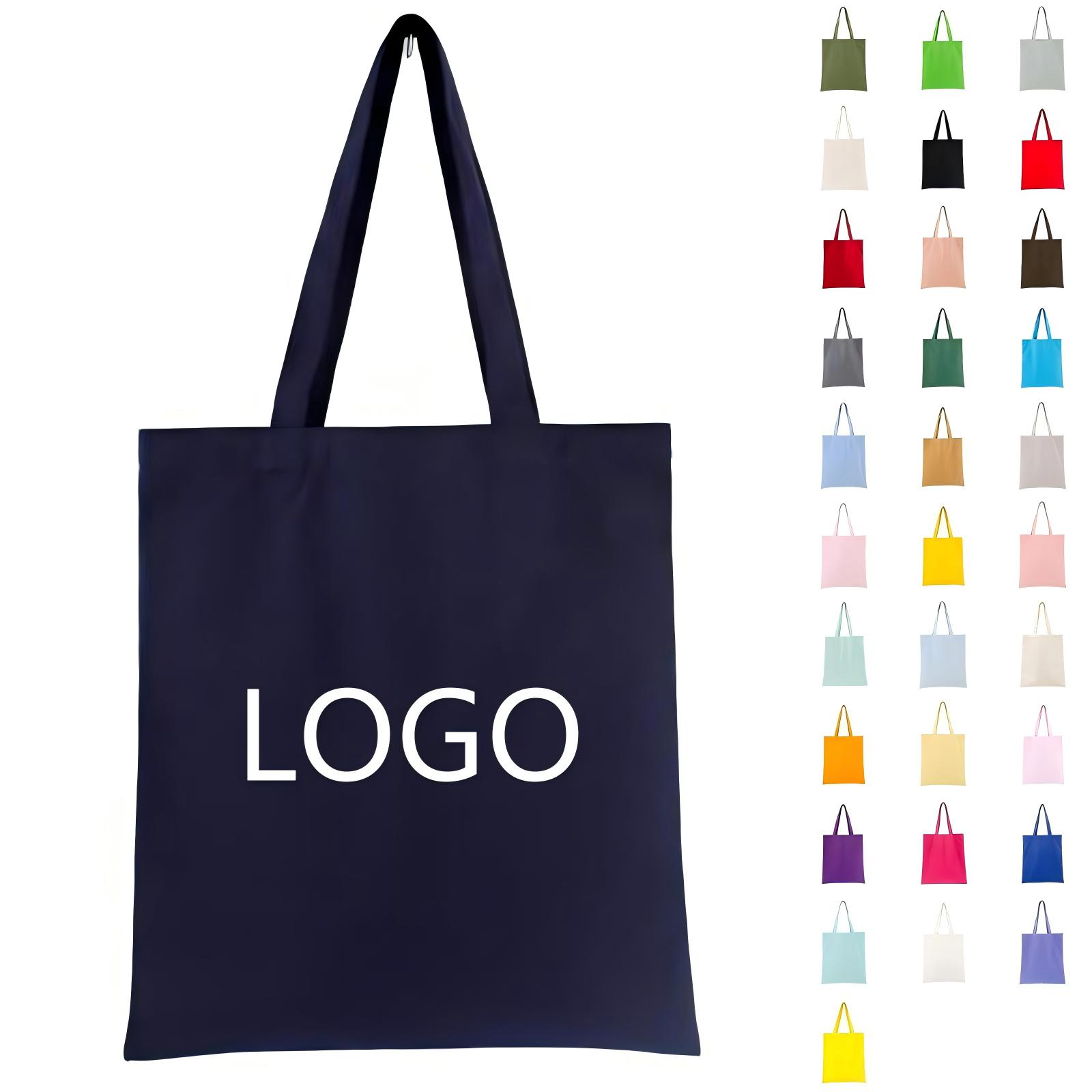
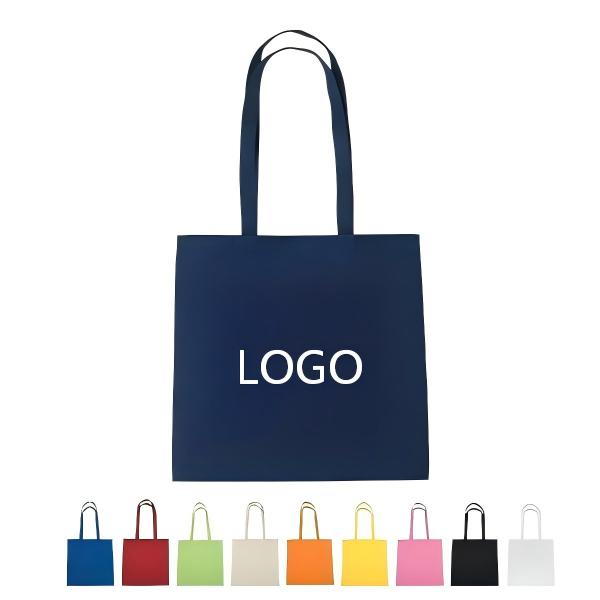
Lowest CPI is not the same as best CPI, though. For most brand-awareness campaigns, tote bags are the smarter anchor. At about $0.0002 per impression, a Standard Vertical Style 12oz Cotton Canvas Tote still undercuts every digital channel by two orders of magnitude while adding three advantages pens cannot match: 1,038 monthly impressions of public visibility (a carried tote acts as a walking billboard), the highest perceived value of any budget-friendly category, and an 11-month lifespan nearly 3x longer than a pen's.
The practical rule of thumb:
- If the only goal is the absolute lowest cost per impression — use branded pens as high-volume handouts.
- If the goal is total brand exposure and perceived value per dollar — anchor the budget on tote bags, then add pens as the low-cost impressions booster.
Beyond Impressions: Engagement Quality Matters
CPI tells you how cheap exposure is, but not how valuable that exposure is. Two channels can have identical cost-per-impression numbers while delivering radically different business outcomes.
The digital ads engagement gap
Digital advertising suffers from a structural engagement problem. Users have trained themselves to ignore banner ads, skip pre-roll video, and scroll past sponsored content. The industry calls it "banner blindness," and the data backs it up:
- 86% of consumers suffer from banner blindness (Infolinks)
- The average human attention span for a digital ad is 1.7 seconds (Microsoft Research)
- Only 2.8% of users believe that digital ads are trustworthy (Nielsen)
- Ad blocker usage has grown to 42.7% of global internet users (eMarketer, 2025)
When you pay for a digital impression, you are paying for the opportunity to be seen — not a guarantee. A significant percentage of your ad spend reaches no human eyes at all due to bot traffic, ad blocking, and below-the-fold placements.
Promotional products drive tangible engagement
Promotional products bypass the attention filter because they occupy physical space in someone's daily life. The recipient does not scroll past a tote bag. They use it. That usage creates repeated, voluntary brand exposure that digital ads cannot replicate.
PPAI data reveals the engagement quality advantage:
- 85% of consumers who received a promotional product in the last 12 months could identify the advertiser
- 83% said they would do business with the advertiser again
- 58% said promotional products influenced their purchase decision
Compare that to digital display ads, where brand recall after a single impression typically falls between 2–5%. Even with repeated exposure, digital brand recall rarely exceeds 15–20% without significant frequency.
Conversion Rates: Digital Ads vs Promotional Products
Conversions look different across these channels, which makes direct comparison tricky but essential.
Digital ad conversion funnel
Digital advertising drives conversions through clicks that lead to landing pages, forms, or purchases. Average conversion rates by channel:
| Channel | Avg. Conversion Rate | Typical CPA |
|---|---|---|
| Google Search Ads | 4.40% | $48–$65 |
| Google Display Network | 0.57% | $55–$80 |
| Facebook Ads (B2B) | 0.90% | $50–$120 |
| LinkedIn Ads | 0.48% | $80–$200 |
The conversion rate tells only part of the story. Digital ads also suffer from click fraud (estimated at 10–15% of all paid clicks) and high bounce rates on landing pages (average 50–60%).
Promotional product conversions
Promotional products influence conversions through a less direct but arguably more powerful mechanism: trust and reciprocity. When someone receives a useful, quality branded item, the psychological effect of reciprocity increases their likelihood to engage with that brand.
Key conversion-related findings from PPAI and ASI studies:
- Recipients of promotional products are 2.5x more likely to have a favorable impression of the advertiser compared to those who only saw a digital ad
- 69% of consumers have used a promotional product in the past 12 months, indicating actual product usage rather than passive receipt
- Trade show attendees who receive a promotional product at a booth are 50% more likely to visit that company's website after the event
Longevity and Shelf Life: The Hidden ROI Factor
Most ROI calculations for digital advertising cover a 30 to 90-day window. After that, the ad stops running, the impressions stop, and the traffic drops off. Promotional products operate on a completely different timeline.
Digital ads: campaign-based value
When a digital ad campaign ends, so does your brand visibility. Unless you continue paying, your impressions drop to zero. Even remarketing lists decay — a typical remarketing audience loses 40–60% of its effectiveness within 30 days.
To maintain visibility, you must reinvest continuously. A $5,000 monthly digital ad budget delivers results for exactly one month. Stop spending, and the results vanish.
Promotional products: compounding value
A well-chosen promotional product continues generating impressions for months after the initial investment. There is no ongoing cost per impression, no click fraud, and no algorithm change that can eliminate your visibility overnight.
| Factor | Digital Ads | Promotional Products |
|---|---|---|
| Duration of value | While campaign runs | 4–14 months average |
| Ongoing cost per month | Full budget required | Zero |
| Algorithm dependency | High (visibility changes with platform updates) | None |
| Risk of fraud | 10–15% click fraud | Negligible |
| Impression quality | Mixed (bots, ad blockers, below-fold) | High (physical, voluntary exposure) |
| Brand recall after 3 months | 2–15% (depends on frequency) | 85% (product still in use) |
This compounding effect means that promotional products often deliver a lower total cost of ownership for brand awareness campaigns, even when the upfront investment feels comparable to a digital campaign of the same size.
When Digital Ads Outperform Promotional Products
This comparison would be incomplete without acknowledging where digital advertising holds clear advantages. Promotional products are not the right tool for every situation.
Digital ads outperform promotional products in these scenarios:
- Immediate response campaigns — When you need leads or sales within hours or days, digital ads deliver faster measurable results.
- Geotargeted campaigns — Digital platforms offer precision targeting by location, behavior, interest, and intent that physical products cannot match.
- Audience scaling — A $1,000 digital ad budget can reach hundreds of thousands of people. The same budget in promotional products reaches hundreds.
- A/B testing — Digital allows rapid creative testing with real-time data. Physical products require longer production cycles.
- Retargeting warm audiences — Digital retargeting serves ads to people who have already expressed interest, a capability that promotional products cannot replicate.
The smartest marketing strategies do not choose one channel over the other. They use each for what it does best.
Budget Breakdown: A Real-World Comparison
Let us put this into concrete terms. Imagine you have a $10,000 marketing budget for a brand awareness campaign. Here is how two approaches might compare:
Option A: Digital-Only Campaign
| Line Item | Cost |
|---|---|
| Google Display (3 months) | $4,000 |
| LinkedIn Sponsored Content (3 months) | $4,000 |
| Retargeting Campaign | $1,500 |
| Creative Production | $500 |
| Total | $10,000 |
Estimated results: ~280,000 impressions over 3 months, ~1,200 clicks, ~50 conversions.
Option B: Promotional Products at Trade Show + Supporting Digital
| Line Item | Cost |
|---|---|
| 2,000 Branded Tote Bags @ $2.50 | $5,000 |
| Trade Show Booth Distribution | $2,000 |
| Follow-Up Digital Retargeting (2 months) | $2,000 |
| Shipping & Logistics | $1,000 |
| Total | $10,000 |
Estimated results: ~22.8 million impressions over 11 months (2,000 bags × 11,400 avg. impressions), sustained brand recall among trade show attendees, warm audience for retargeting ads, stronger booth traffic.
The promotional products approach delivers roughly 80x more total impressions from the same budget, spread over a much longer period. The trade-off is that those impressions are less targeted and slower to accumulate.
Calculating Your Own Promotional Products ROI
If you want to evaluate promotional products against your specific digital advertising benchmarks, use this framework:
Step 1: Determine your cost-per-impression for digital
Add up your total digital ad spend over a defined period, divide by total impressions served. Include creative costs, agency fees, and platform costs — not just media spend.
Step 2: Estimate impressions per promotional unit
Use PPAI's category averages as a baseline, then adjust for your specific use case:
- Trade show handouts — Lower individual impressions but higher conversion intent from attendees
- Direct mail campaigns — Moderate impressions, high targeting accuracy
- Employee gifts — Lower public impressions but strong internal engagement
- Client appreciation — High-value recipients, strong conversion influence
Step 3: Factor in conversion lift
Promotional products do not always drive direct conversions, but they lift conversion rates across other channels. Measure this by comparing conversion rates between recipients and non-recipients in your CRM.
Step 4: Calculate total cost of ownership
Include production, shipping, storage, and distribution costs — not just unit price. A Premium 100% Cotton Canvas Tote at a higher unit price may actually deliver a better CPI if its quality extends the product's usable lifespan.
Step 5: Compare on equal timeframes
The most common mistake is comparing a 3-month digital campaign to a one-time promotional product distribution. Compare over the same time horizon — ideally 6 to 12 months — to capture the full value of both channels.
Recommended Products
Choosing the right promotional products maximizes your impressions-per-dollar. These products offer strong durability, high visibility, and broad audience appeal:
- Standard Vertical Style 12oz Cotton Canvas Totes — The workhorse of promotional bags. Low unit cost, high imprint area, and an average lifespan of 11 months make this one of the most cost-effective awareness tools available.
- Premium 100% Cotton Canvas Totes — When you need to convey quality alongside your brand message, these heavyweight canvas totes deliver a premium feel that recipients keep longer.
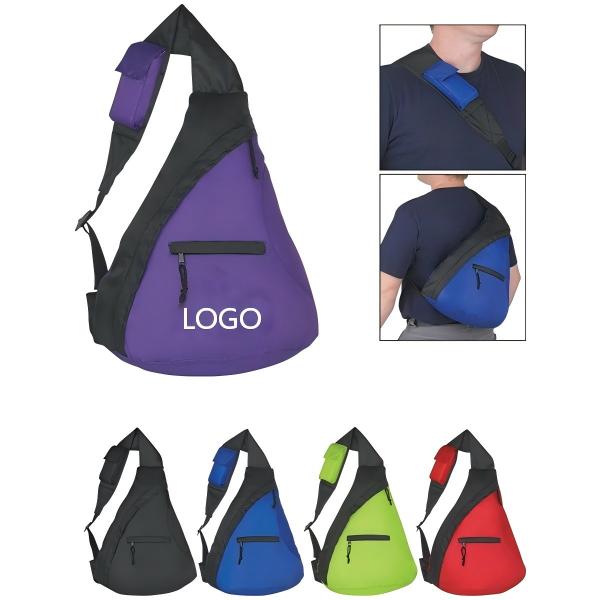
- Affordable Crossbody Backpacks — Crossbody packs are worn, not carried, which means your logo stays visible at all times. Ideal for employee onboarding kits and event giveaways.
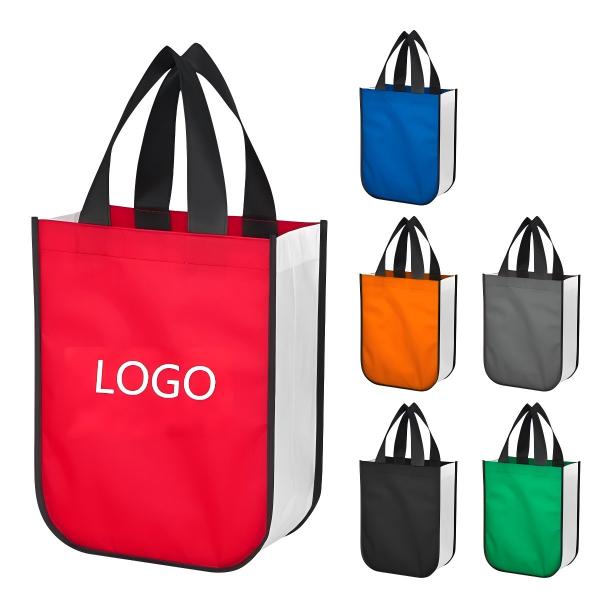
- 100% Recycled RPET Shopper Totes — Eco-conscious promotional products signal brand values while delivering the same impression volume as standard bags. Increasingly favored by corporate buyers with sustainability mandates.
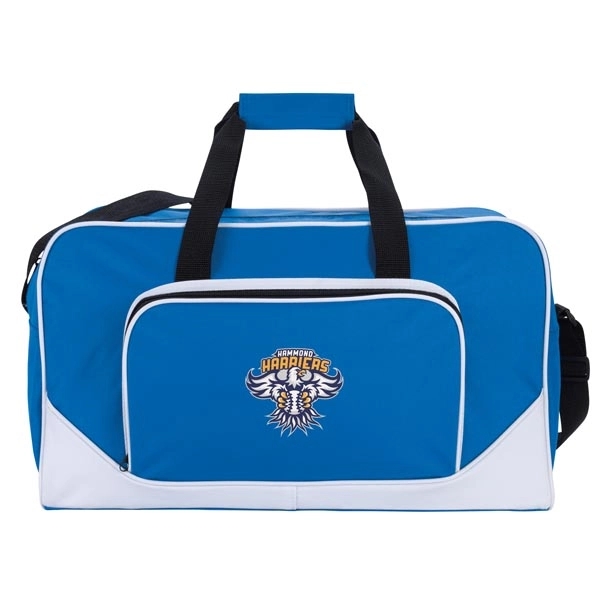
- Team Spirit 600D Polyester Duffel — Duffel bags travel with their owners — to gyms, weekend trips, and sports events — extending your brand reach well beyond the original distribution point.
Ready to see how promotional products can complement your digital advertising strategy? Request a quote to explore pricing for your next campaign.